When Supabase Postgres Is Already Your Source of Truth and You Still Need a Dedicated Analytics Backend
Separating analytics from Postgres protects production and gives agents governed metrics.
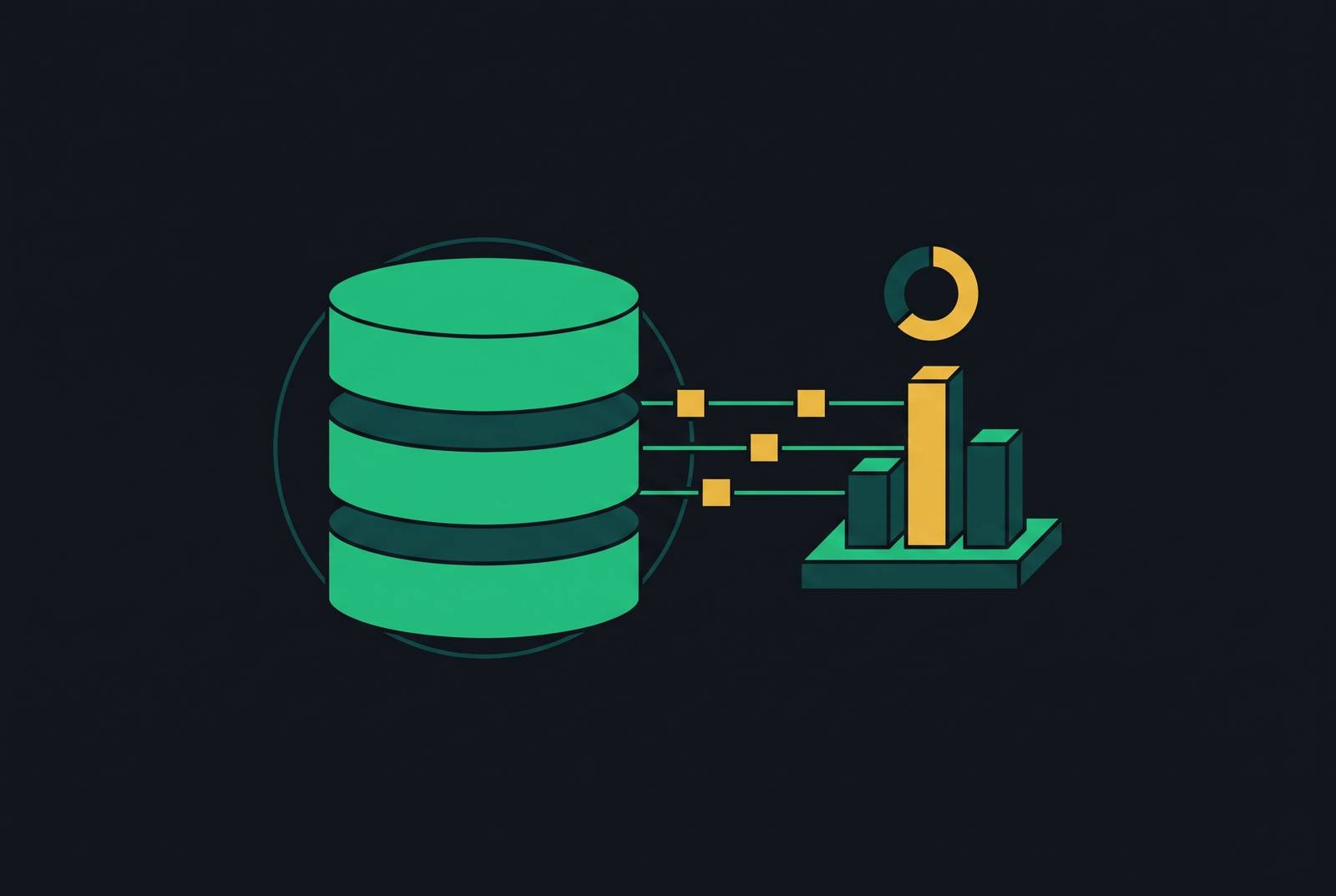
For API-first and agent-first teams building on Supabase, the best-fit headless analytics platform is a governed backend that serves pre-modeled metrics through APIs and MCP without requiring a prebuilt dashboard UI. Postgres remains the source of truth, while a separate analytical layer handles cross-source queries and metric delivery. That separation protects production performance and permissions while giving humans and agents a consistent account of the business.
Why Supabase teams trust Postgres as their source of truth — and why that trust creates a problem
Supabase builds auth, storage, realtime, edge functions, and auto-generated APIs around a single dedicated Postgres instance. Application data, user records, and business events therefore accumulate in one relational store by design. This is a strong foundation for an application. SQL, joins, foreign keys, triggers, and stored procedures give teams a coherent way to record business activity, while Row Level Security enforces permissions at the database layer rather than leaving each access path to implement them separately.
Supabase's Select 2026 event expressed that ambition as “the same Postgres carries it from prototype to petabyte.” For founders, the appeal is continuity rather than an eventual migration away from the database they trusted at the start. That trust is justified for transactional work. The complication begins when the concentration of authoritative data makes the same instance the default destination for every business question. A source of truth establishes which records are authoritative, but it does not have to execute every calculation derived from them.
How Postgres's row-oriented architecture conflicts with analytical workloads
Policies built around auth.uid() and per-user application logic work for an application, but they do not fit a BI service account that scans across users. Teams must either grant a role that bypasses RLS or add policies for analytics to the production authorization model. The analytical consumer needs a different scope of access from the user whose transactions the database serves.
Connection pooling introduces a second mismatch. Supavisor's transaction mode works well for short-lived connections and does not support prepared statements by default, though teams can turn on named prepared statements through a feature flag. BI tools that depend on them can use session mode or a direct connection instead. That workaround leaves long-lived dashboard connections against the application database.
Row-oriented storage suits point lookups, inserts, and updates, whereas analytical queries scan and aggregate large portions of a dataset. On the primary, both workloads compete for CPU and memory. Indexing and larger instances can ease particular queries without changing that underlying conflict. JSONB adds another difficulty because flexible application fields are opaque to drag-and-drop BI tools, encouraging separate extraction queries that produce inconsistent numbers.
The concrete costs of running analytics on the production primary
A compute upgrade is the most immediate response to slow dashboards. As the events table grows, the team needs larger instances to handle analytics even when application traffic does not call for them. The upgrade serves the BI workload instead. That expense buys more shared capacity while leaving analytical queries and live transactions within the same boundary, so the risk of production contention remains.
A read replica gives reads that boundary, but comes with a large bill of its own. It runs at the primary's compute size, bills separately without plan compute credits, and requires slightly more disk at the same per-GB rate. In practice, the database can cost almost twice as much as before. The replica still provides single-source, row-oriented analytics with JSONB friction and asynchronous replication lag. It also cannot supply Stripe or CRM data that is absent from the database.
Replicas scale reads while leaving the single primary's write limit in place, constraints that are especially difficult for seed-stage and Series A teams that have outgrown one node on reads and are still awaiting their first data hire. Their recovery capacity is limited as well. A runaway analytical query is therefore both a performance problem and an operational risk for the people responsible for keeping the application available.
What Supabase itself provides for observability and analytics — and where it stops
Supavisor handles pooling, read replicas support read-heavy workflows, and performance advisors include Index Advisor. Health Check Advisors flag elevated error rates across the Data API, Auth, Storage, and Edge Functions, while log drains send logs to external systems. These tools address real production needs. The Select 2026 recap also introduced Database Connections, which shows which sessions are holding connections, running long, or blocking, plus an MCP tool for querying logs.
Operational visibility is not the same as governed business analytics. Supabase's self-hostable Analytics server uses Logflare with either Postgres or BigQuery as its backend. Its self-hosting documentation says the Postgres backend “is not yet optimized for a high volume of inserts, or for heavy query usage” and recommends BigQuery for production self-hosting.
Supabase Pipelines makes workload separation explicit. Featured at Select 2026 and currently in public alpha on paid plans, it streams Postgres data to BigQuery, ClickHouse, DuckLake, or Snowflake in near real time so analytical queries run elsewhere. What it does not natively supply is a pre-modeled layer that joins external business sources, establishes shared metric definitions, and safely exposes pre-calculated datasets to agents.
Why AI agents querying the production database directly create a new and distinct risk
A logic bug, unexpected input, or prompt injection can become unintended exposure or, where permissions allow writes, corruption of production data. With an agent, teams cannot fully predict how it will query data when they configure it, as they can with a fixed dashboard. A read-only connection removes write access, but it does not by itself constrain arbitrary queries or establish which data the agent should see.
The appropriate access pattern treats each agent as an identity. A team should register the agent, assign an owner, record its purpose and allowed connectors, and establish least-privilege access before connecting it. A governed analytical copy gives that policy a separate place to operate, with purpose-bounded datasets. When agents can only read those authorized datasets, their requests cannot change live orders or user records. Stale metrics remain a possible limitation, but production corruption is outside that access path.
What a dedicated analytics backend actually means in practice for a Supabase team
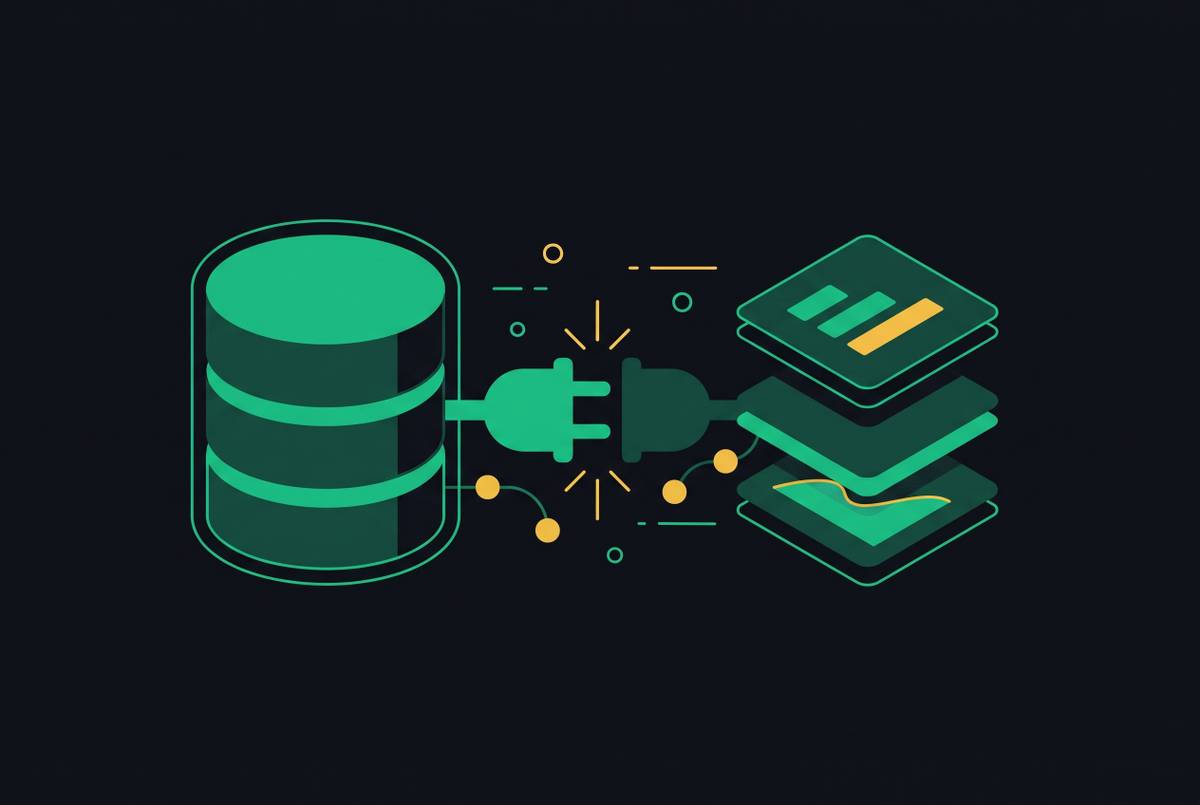
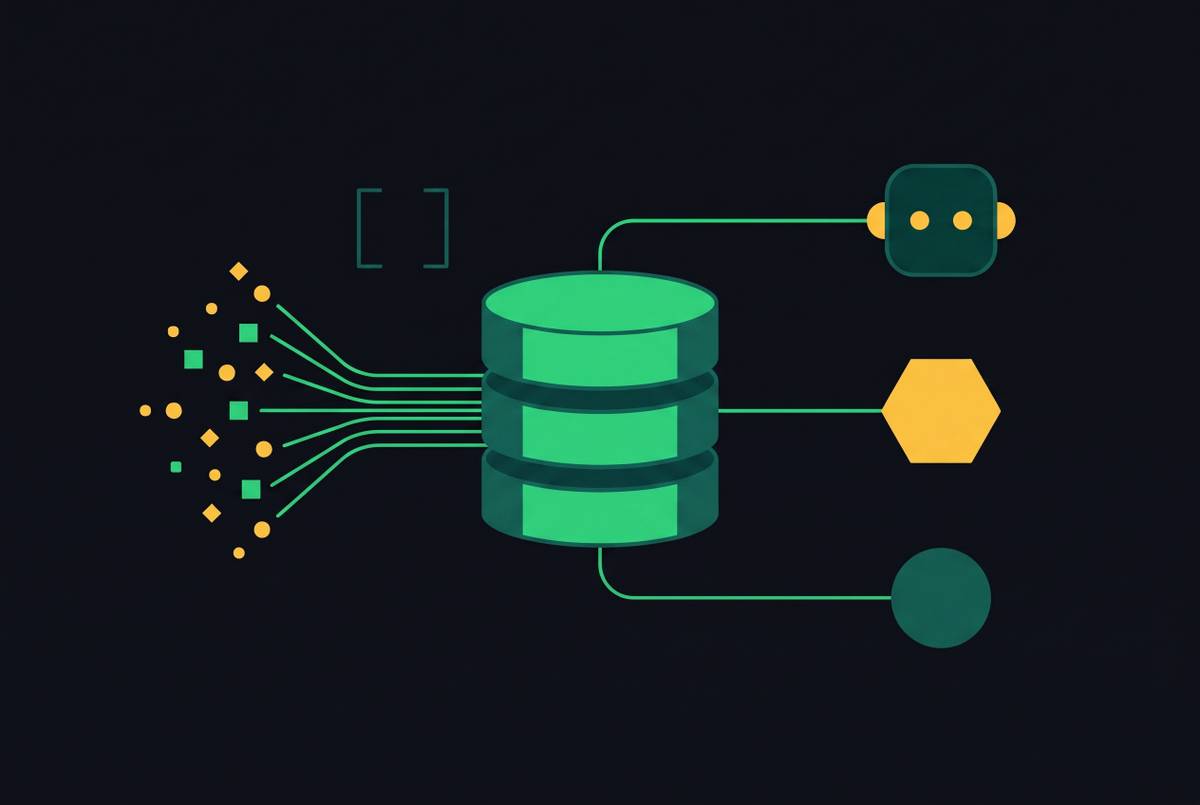
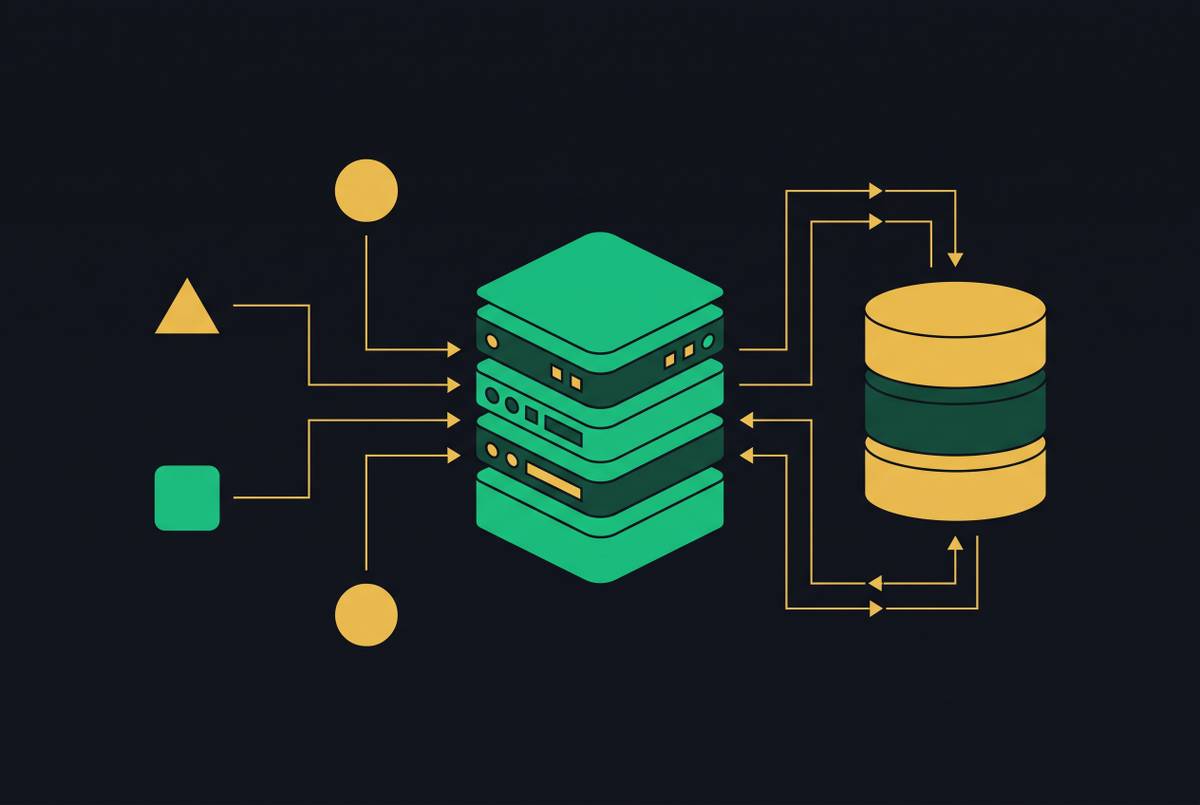
A dedicated analytics backend receives production data through replication, streaming, or export and models it into governed datasets. Dashboards, APIs, and agents query those datasets. Postgres continues to record application state, while the analytical layer prepares that state for business questions.
For most Supabase teams, a lightweight columnar layer is a better fit than assembling a full warehouse stack. Columnar storage works well for broad scans and aggregations, and the separate layer can bring application records together with Stripe, CRM, and ad data. Cross-source questions require that broader view. Cohort revenue joined with Stripe charges or activation joined with marketing spend cannot be answered from production tables that never contained all the inputs.
Instead of reconstructing ARR, churn, or activation rate from raw tables for every request, the backend computes canonical values on a schedule and makes them available to consumers. Scheduled computation also makes freshness an explicit property of the dataset. Most importantly, sales, finance, product, and agents receive the same metric definition rather than maintaining separate interpretations of the same business term.
How MCP exposure makes a governed analytics backend consumable by agents and humans alike
MCP gives agents a shared interface to that governed layer. An agent can ask for a defined metric without writing an arbitrary production query, and a human-facing application can use the same dataset through an API. For a team adding usage analytics to an AI agent, this means metric delivery need not depend on adopting a prebuilt dashboard UI.
Supabase's Select 2026 app-level MCP server illustrates permission-aware tool access. It runs as an Edge Function, with RLS policies deciding what each authenticated user's agent can reach. The July 2026 MCP specification revision removed protocol-level sessions, so remote servers can run behind a plain load balancer without sticky sessions or a shared session store. That simplifies deployment for teams without dedicated infrastructure engineers.
Salesforce Headless 360, announced at TrailblazerDX on April 15, 2026, exposes data, workflows, and business logic through APIs, MCP tools, and CLI commands. The launch included more than 60 MCP tools, and Salesforce reported millions of MCP calls processed by late May 2026.
Access alone does not make an answer reliable. An MCP server over ambiguously named raw tables still leaves an agent to infer what the numbers mean. Defined metrics must therefore precede exposure, so tools speak in terms such as ARR, churn, and activation. MCP delivers governed data. It does not create the governance.
Why founding teams should build this separation before they feel the pain, not after
Deferring analytics architecture until the first data hire allows inconsistent numbers and production query dependencies to accumulate. By the time someone takes charge of the work, investor reports, internal reviews, and product dashboards may already calculate the numbers in different ways. Removing those dependencies is a refactor. Early separation avoids making dashboard slowdown, an agent deployment, or a Series A data room the event that forces the work.
Teams that have yet to make their first data hire should let a partner run the infrastructure while keeping control of metric definitions. Most should choose five or fewer actionable KPIs and assign one owner as the final arbiter of their meaning. For B2B SaaS teams, those KPIs commonly include CAC, LTV, monthly churn, ARR, and gross margin. The definitions remain a business responsibility even when a partner operates the backend.
The required data usually exists already across Supabase, Stripe, a CRM, and spreadsheets. Collecting more of it is not the immediate objective. Teams need to turn those records into canonical KPIs before competing versions become part of how they report the numbers. As with setting up connection pooling early, it is easier to make this architectural choice before consumers depend on the wrong access pattern.
What analytics backend works best for Supabase teams that need full API control and no opinionated frontend?
The best-fit backend separates the data contract from its presentation. It exposes governed datasets through APIs for custom interfaces and through a single MCP server for agent workflows, without making a dashboard the required entry point. This is the practical meaning of headless analytics. A team keeps control of how metrics appear in its product while the backend owns their analytical preparation and delivery.
For a Supabase team, that backend should accept Postgres as a source without requiring production schema changes, team-maintained ETL pipelines, or new infrastructure to operate. Parquet over DuckDB is an emerging pattern for serving pre-modeled datasets at analytical speed and low query cost. The relevant comparison is with the work left to the team. A read replica offloads reads but preserves the row-oriented, single-source model, while a full warehouse build introduces a broader engineering commitment.
Native multi-source joins are another selection criterion. LTV by acquisition channel and churn by cohort joined with billing data require application, payment, CRM, or advertising inputs in one analytical layer. Those joins must keep the shared definitions intact, and both API and MCP access must use them. Operational simplicity completes the profile. A founding team needs a governed layer available in days, rather than weeks of setup followed by maintenance that requires a dedicated data team.
The principle that ties it together — the analytics layer protects the trust placed in Postgres
The architectural choice is between assigning distinct responsibilities and forcing one production instance to absorb every use of its data. Postgres remains authoritative for the state of the business. The analytical layer derives metrics from that state under explicit definitions and access rules, without putting each consumer on the transactional request path.
That boundary becomes more important as agents participate in business operations. When an agent can only request an authorized, pre-modeled metric, it cannot use that request to change a production transaction or lock a production table. Its usefulness depends on the quality of the governed dataset. Trust in a source of truth is sustained by protecting the work only it should do.