Prompt Injection Risks in Agentic SQL Pipelines
Agentic SQL pipelines amplify prompt injection into data breaches and silent corruption.
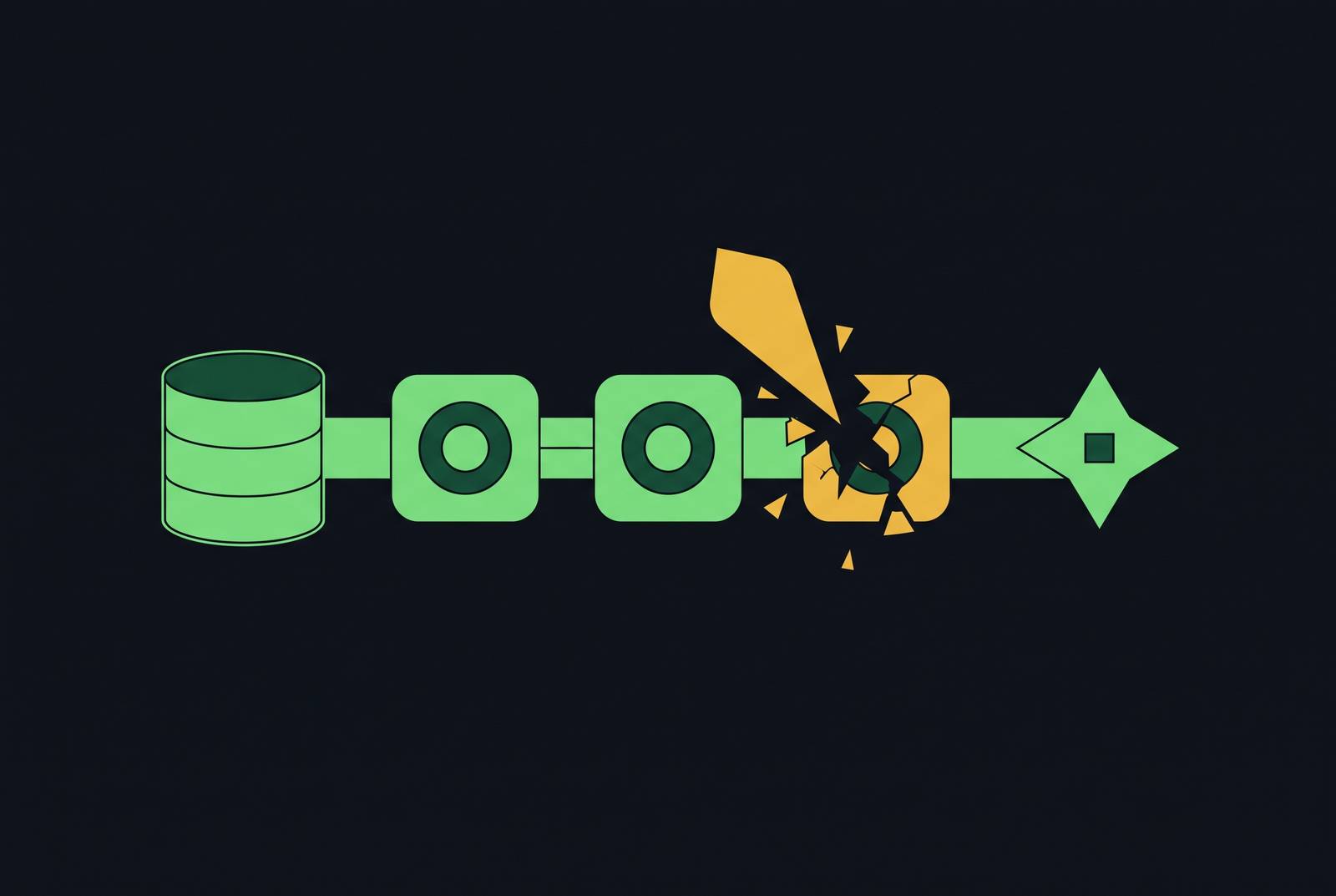
Prompt injection in agentic SQL pipelines is dangerous at the structural level, in a place no model update or prompt hardening can reach. There is no syntactic boundary inside a large language model that separates an instruction from a piece of data.
Prompt injection as a structural property of how agents process text
SQL injection, the vulnerability this new problem is most often compared to, had a real fix. Parameterized queries keep query logic and user-supplied data in separate execution layers, and the database enforces that separation deterministically, every time, regardless of what a user types into a form. The fix worked because SQL's grammar lets a database engine enforce the separation between a command and a string.
Nothing comparable exists for a language model. An LLM receives the system prompt, the user's request, a retrieved database row, a tool response, and a poisoned document as the same kind of artifact: a stream of tokens. The model applies the same next-token prediction to all of it, regardless of which part was supposed to carry authority and which part was supposed to be inert content. The model was never built with an execution layer underneath it that enforces a distinction between instruction and data.
OWASP named prompt injection LLM01:2025, the top-priority entry in its Top 10 for LLM Applications, and the organization was explicit that it is a structural characteristic of how language models work. That framing matters because it tells you where the fix has to live. It cannot live inside the model, the way parameterized queries live inside the database engine. It has to live outside the model, at the architecture and governance layers that surround it, a thesis the rest of this piece sets out to prove.
So the gap stays academic if a model only talks. But give the model tools that can read, write, and act on real systems, and it turns into something else.
How agentic SQL pipelines expand the blast radius beyond earlier prompt injection research
Early prompt injection research treated the risk as bounded: a chatbot says something embarrassing or off-brand, and the damage is reputational. An agent wired into a database does not have that luxury, because a successful injection there is not a conversational failure. It can be a data breach, a corruption event, or a silent poisoning of the agent's own future reasoning.
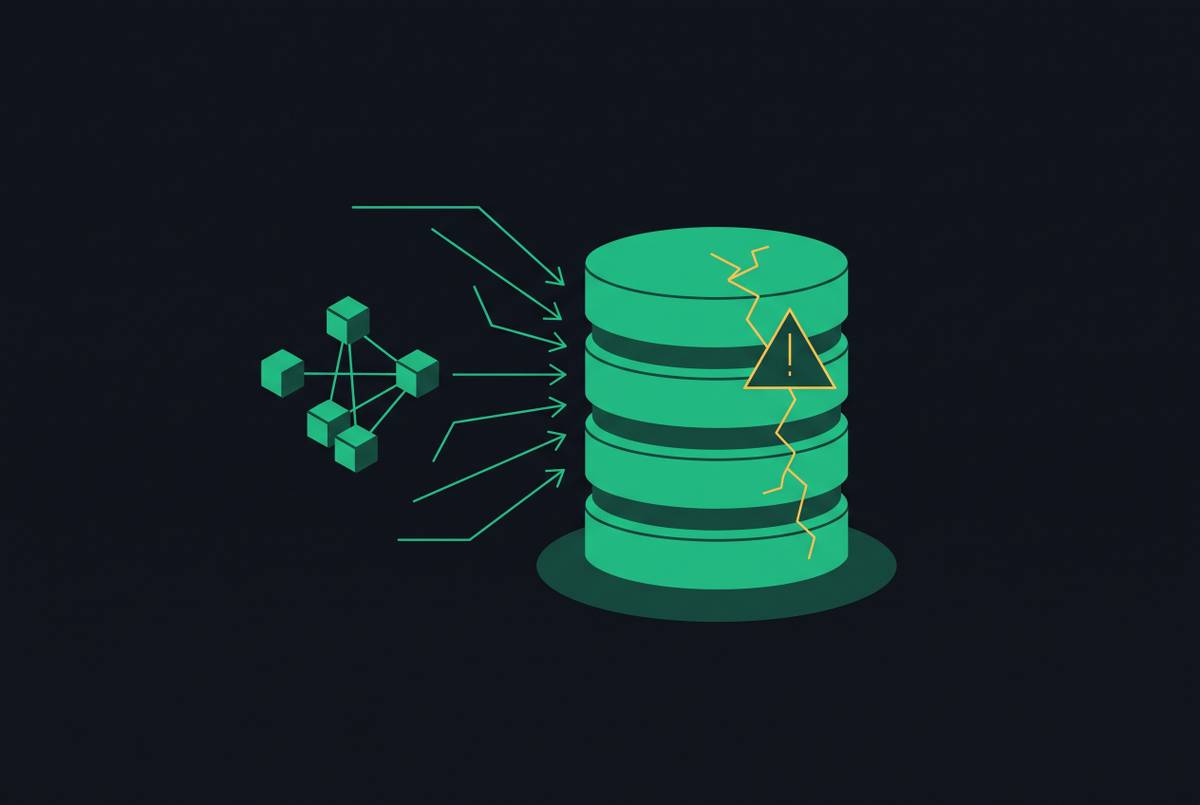
Database access introduces three failure modes absent from conversational AI. The first is unsafe query generation: crafted input leads the agent to construct a query that returns exactly the data an attacker wants, and the agent never recognizes it has been redirected. The second, and the one most teams underweight, is write-side corruption. A poisoned or mistaken row does not stay where it lands: it gets read by the application, joined into reports, embedded into the agent's persisted state, and trusted by the very next run, and a single bad write can propagate through every downstream process that touches it. The third is attribution collapse: when an orchestrator fans one instruction out to multiple sub-agents that all arrive over a single database connector, Postgres sees one role issuing everything. Individual agent actions become unattributable, and there is no way to isolate which sub-agent did the damage after the fact.
Researcher Simon Willison has described the underlying mechanism as the "lethal trifecta": any agent that combines access to private data, exposure to untrusted content, and the ability to communicate externally can be turned into an exfiltration tool by a single crafted piece of injected content. The poisoned content steers the agent, the agent pulls the sensitive data, and the agent sends it out, all in one uninterrupted sequence that looks, from the database's point of view, like ordinary agent behavior.
Where injected instructions enter an agentic SQL pipeline
Direct injection, the "ignore previous instructions" variety, is the most visible form of the attack and also the least dangerous, because it requires the attacker to already have access to the agent's input. Indirect injection is the dominant threat vector in SQL pipelines, and it arrives through more surfaces than most teams account for: the attacker never touches the agent's interface at all, but instead plants instructions in content the agent will eventually retrieve on its own.
Database records themselves are one such surface. A row value in a table the agent queries can carry embedded instructions, and the agent, reading that row as data, processes the instruction as a command instead. Tool responses and MCP server output present a parallel risk: when an agent calls a tool through MCP and the tool returns a payload, that payload becomes trusted context the moment it enters the agent's window, and a poisoned tool response is indistinguishable from a legitimate one. Documents fed into a retrieval pipeline to ground the agent's SQL generation carry the same exposure. If an external party can contribute content to that retrieval corpus, it can plant an instruction inside it. Schema metadata is a subtler version of the same problem: agents that introspect a database's schema to generate queries read column comments, table descriptions, and view definitions as part of their context, and any of those fields can carry a hidden instruction as easily as a row value can.
University of Washington research identifies a further surface that deserves to be treated on its own terms rather than folded into the retrieval case: agents that maintain persistent memory files and knowledge bases across sessions. Malicious instructions embedded in those files do not just affect the session in which they were planted. They influence all future behavior: if a single injection into a memory file succeeds, it can corrupt the agent's reasoning on every subsequent run, long after the original attack vector has been closed, because the payload has already been absorbed into what the agent treats as its own accumulated knowledge.
MCP as the agent-to-database interface and its injection and trust-boundary risks
The Model Context Protocol has become the standard way an LLM application discovers and calls external tools and data sources, and it earned that position by solving a real integration problem: without a shared protocol, every agent needs a custom connector for every tool, an N×M problem that does not scale. The same discoverability that makes MCP useful is what makes it an attack surface, because an agent that can discover and trust new tools automatically is an agent that can be handed a malicious tool automatically.
Tool Poisoning is the clearest expression of this risk. An attacker who maliciously modifies tool metadata or descriptors, injecting them into a client through the tools/list method, can cause an agent to invoke, trust, or execute a compromised tool without any indication that anything has changed. An agent that believes it is calling a read-only analytics endpoint may in fact be calling an exfiltration sink, and the agent has no mechanism for telling the two apart. Compounding this, OWASP has flagged a specific developer assumption as a documented failure mode: treating LLM-mediated input as inherently sanitized. The model transforms input, but that is not sanitization, and if you believe it is, you close off the inspection your team would otherwise apply.
The July 2026 revision to the MCP specification removed protocol-level session tracking, made the protocol stateless, and introduced a requirement for OAuth 2.1 compliance along with an explicit prohibition on token passthrough. Those changes tighten what the protocol intends, but they are requirements placed on implementations, and the protocol itself does not enforce them, so a specification change does not retroactively secure a deployment that fails to adopt it. The supply chain adds its own layer of risk on top of this. A package called postmark-mcp shipped 15 clean versions, numbered 1.0.0 through 1.0.15, to build legitimacy, and only later was a single line of exfiltration code added in a later release. The agent's trust in a tool it had used safely for months was itself the exploited surface. CVE-2025-6514, a remote code execution flaw rated 9.6 on the CVSS scale, was disclosed in mcp-remote, a popular npm proxy package used by MCP clients relied on by hundreds of thousands of developers, which illustrates how a single compromised link in the MCP ecosystem can reach a very wide population of agent deployments at once.
Postgres access controls: necessary but not sufficient when an agent is the client
Row-Level Security and role-based permissions are genuine protections; they are not security theater. RLS binds roles, enforces per-row policies at the database layer itself, and cannot be bypassed by application code running under a properly constrained role.
Superusers bypass RLS entirely, by design. Table owners bypass it as well, unless FORCE ROW LEVEL SECURITY has been explicitly set on the table, a step that is easy to skip under deadline pressure. In Supabase specifically, the service_role bypasses RLS by design, and the moment a team reaches for the service key to make an integration "just work," the boundary that RLS was supposed to provide disappears. Attribution collapse reappears at this layer too: when multiple sub-agents share a single role, every write looks identical to Postgres. There is no per-agent audit trail, and a compromised sub-agent's writes are indistinguishable from the legitimate writes sitting next to them in the log. Among Postgres MCP servers in active use, read-write-by-default is the norm, because you have to opt in explicitly to get the safe, read-only configuration. The unsafe configuration is simply the path of least resistance, and teams moving quickly tend to take it.
Supabase's own response to a prompt-injection incident involving its MCP server was to make "read-only, project-scoped" the recommended default configuration in its MCP documentation, while still permitting write access for teams that need it during development. That guidance applies as Supabase becomes a connector on Perplexity Computer, a hosted agent orchestrator, an integration announced via the Supabase blog and noted earlier in the June 2026 Supabase developer update, and write-capable agents connected to production Postgres instances are becoming the production reality rather than an edge case, so the gap between what RLS was designed to do and what an agentic client needs from it has to be closed deliberately, not assumed away.
An architecture safe by construction for agentic SQL access
Because no model-layer equivalent of a parameterized query exists, safety has to be engineered as a stack of architectural constraints. The goal of that stack is not to prevent injection from occurring at all, which the structural argument above shows is not achievable, but to ensure that a successful injection cannot automatically turn into a breach. The most structurally sound control is to place a narrow, read-only query layer between the model and the production database, so that the agent inspects only approved schema metadata, generates a SELECT statement, and receives a bounded result set, while never holding the application password and never inheriting write access it does not need; this single design decision closes off the unsafe query generation and schema-leak surfaces described earlier, because there is no path from a poisoned row or tool response to a destructive statement if the agent was never capable of issuing one.
Where an agent genuinely needs write access, you have to make the controls more deliberate still. Each agent identity should run under its own dedicated, least-privilege database role, never a shared or service role: a write traced to a specific role is a write traced to a specific agent and task, not an anonymous blob of activity. RLS policies need to be written with that agent role explicitly in mind, with FORCE ROW LEVEL SECURITY set on every table the agent can reach, closing the table-owner bypass that otherwise undermines the policy. Standing credentials should give way to short-lived ones, which limits the window of exposure if a credential is extracted through an injected instruction, and every write needs statement-level audit logging that attributes it to the specific agent and task that issued it, so you get back the per-agent trail that shared roles erase. Any schema-changing or destructive operation should pass through a policy gate rather than executing automatically, and operational limits, statement timeouts, row limits, rate limits, and concurrency limits, should be applied as blast-radius controls: none of them stop an injection from happening, but each one bounds what a successful injection is able to do once it lands.
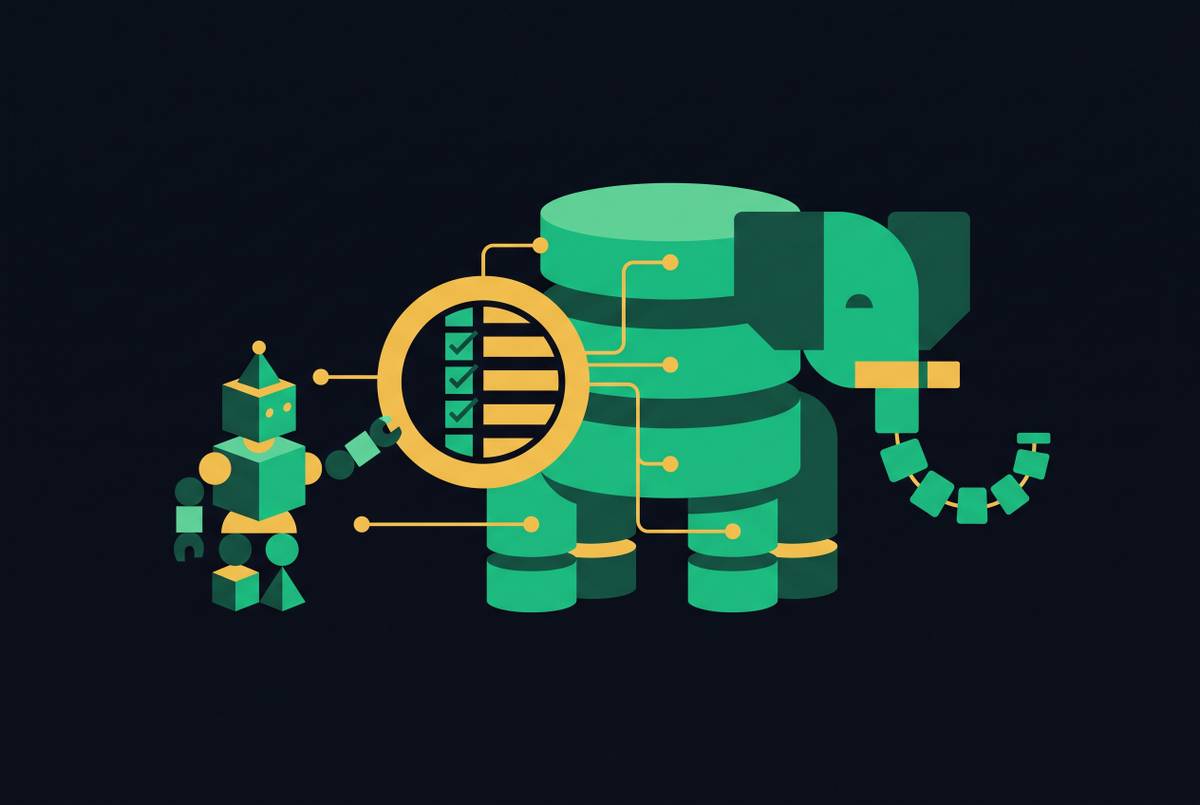
Meta's "Agents Rule of Two" offers a useful heuristic for deciding when a human needs to be in the decision loop at all: an agent operating without human approval may safely satisfy two of the three conditions in the lethal trifecta, access to private data, exposure to untrusted content, or the ability to communicate externally, but all three together demands a human checkpoint before the agent acts. Supabase Agent Skills, an open-source package that equips AI coding assistants with concrete PostgreSQL best-practice rules across eight categories, including the RLS nuances described above, puts this principle into practice: it embeds the security constraint into the agent's own guidance, so the agent does not have to discover the right behavior on its own.
A governed, pre-modeled data layer as the architectural answer Supabase teams already have access to
The most durable defense against prompt injection in a SQL pipeline is a data architecture that makes the dangerous access patterns structurally unavailable to the agent in the first place, removing the target itself.
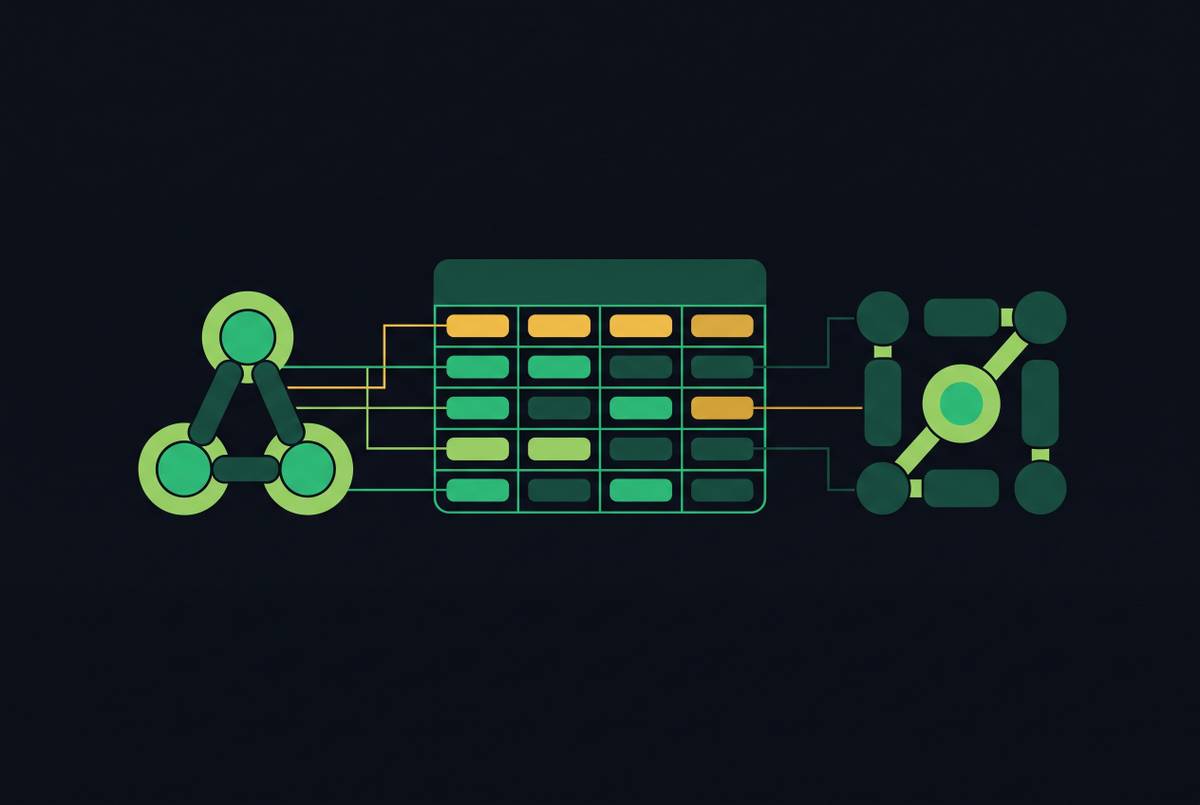
The semantic-layer principle follows directly from the diagnosis built across this piece: an agent working from governed, pre-calculated datasets cannot guess against raw schemas, and it cannot reach tables it was never meant to see, because those tables are simply not part of what it has access to. The governed definition of "revenue" or "active customer" becomes the query itself, rather than something the agent has to reconstruct from raw tables, schema comments, and whatever metadata happens to be sitting nearby. Exposing agents to pre-modeled Parquet datasets, queryable through DuckDB, rather than live Postgres tables means agents never touch the production database at all: no injection payload can trigger a write against it, and no schema introspection can leak table structure beyond what the governed dataset already exposes on purpose. A single MCP server built to expose those governed datasets gives agents fast, accurate, inexpensive-to-query context, the production database never enters the agent's blast radius, and the tool-poisoning and schema-leak risks described earlier are closed at the source.
One metric definition, shared identically across human dashboards, investor reports, and AI agents, carries more value than any single dashboard feature could on its own. When the agent's definition of "active user" is identical to the board's, an injection payload that tries to redirect the agent's math has no raw schema left to exploit, no alternate table to reach for, and no ambiguity to hide inside. That is what an architecture safe by construction looks like: not a model that has learned to resist manipulation, but a system built so that manipulation, even when it succeeds, has nowhere left to go.