Connecting Supabase Postgres to an MCP Analytics Layer
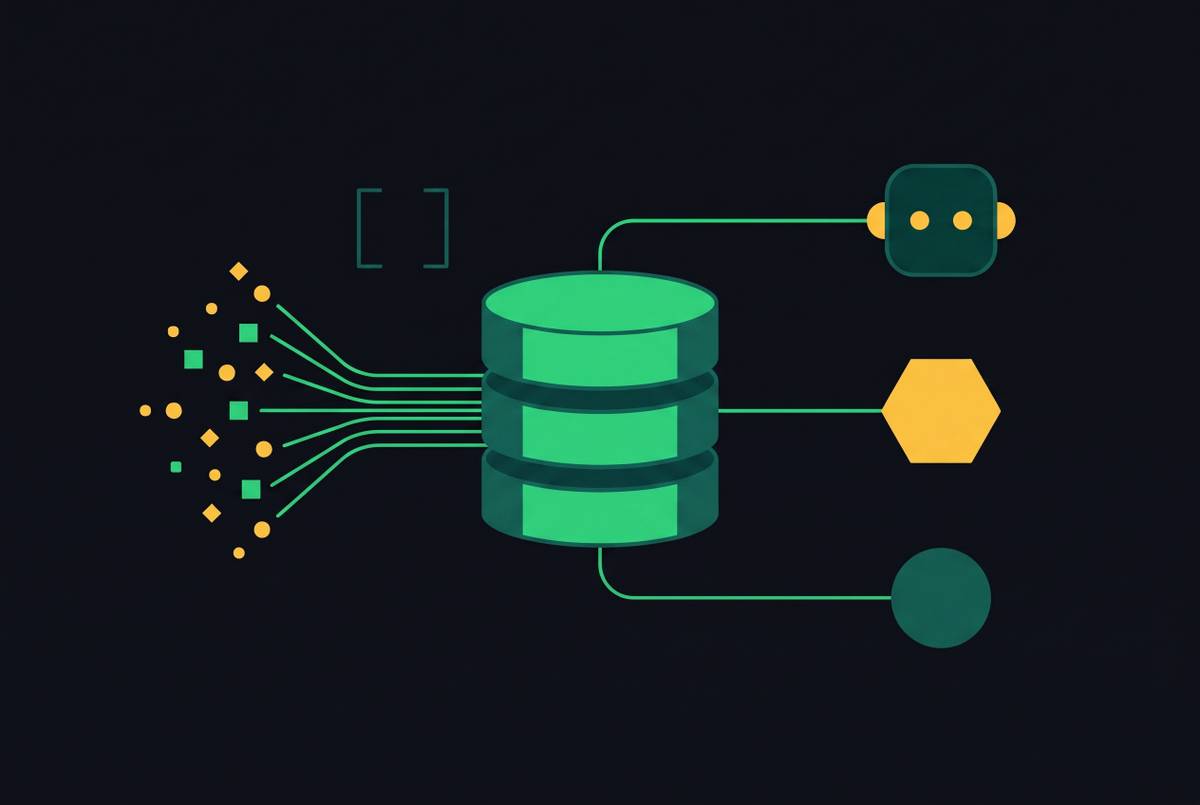
Build a semantic layer above your database instead of connecting agents directly to production.
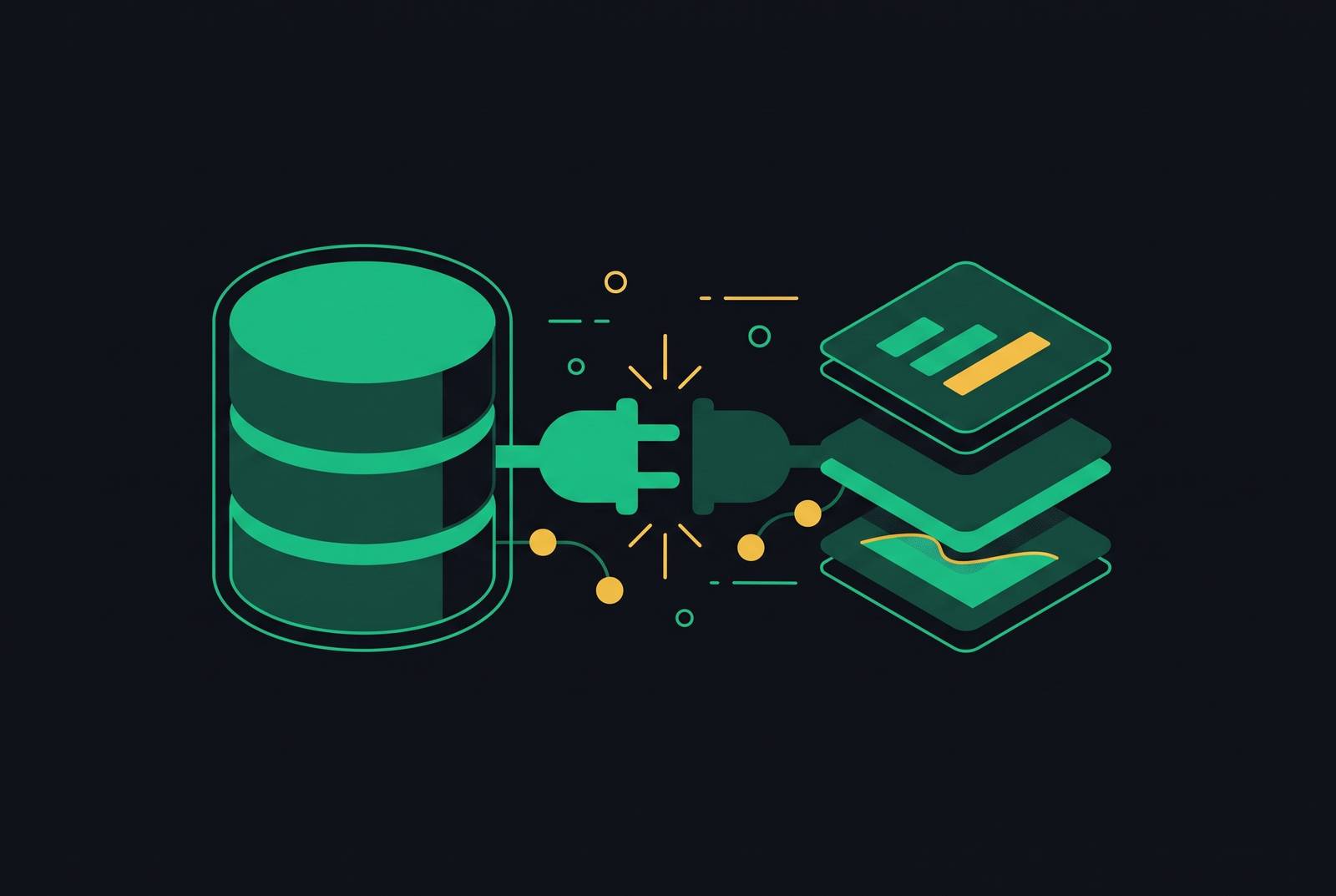
For API-first and agent-first teams building on Supabase, the right analytics backend is a headless, governed layer that exposes shared metric definitions through an API and MCP without requiring a prebuilt dashboard UI. Connecting Supabase Postgres to that layer gives agents pre-modeled data so they do not have to interpret raw tables. The decisive choice is not MCP itself, but the analytical and security boundaries behind it.
Why connecting an agent directly to production Postgres is the wrong starting point
An agent asked to calculate revenue from a production Supabase database has a reasonable task. A direct Postgres MCP connection gives it a way to issue SQL, but neither a reliable definition of revenue nor a separate place to do the work. The request can therefore fail operationally, analytically, or at the authorization boundary. Each failure needs more than a better prompt.
The first failure is connection-pool exhaustion. Agent queries can consume the connections available to production Postgres, and adding MCP server instances does not remove that constraint. The bottleneck sits at the database engine. More capacity to accept agent requests is not more database capacity to execute them. Scaling the connector alone leaves the underlying contention unresolved.
The second failure is plausible but incorrect SQL. EnterpriseDB’s May 2026 account documents models referencing nonexistent tables, columns renamed six months earlier, and invented JOIN conditions. Some errors fail visibly, which at least exposes the problem. Others produce executable queries with incorrect results. An answer returned without an error can conceal the more serious analytical failure.
Microsoft shipped 33 expert sub-skills with its Postgres MCP Server because model weights do not hold enough sound knowledge of Postgres to run it correctly. That expertise ships as files that update like code. However, additional knowledge does not resolve the third failure, which is distinguishing an authorized request from one the model was tricked into making. Microsoft states that the server “doesn't decide what's allowed”. Role permissions remain the boundary, regardless of how confidently the agent explains its request.
What MCP actually is and why its maturation makes the layer-choice question urgent now
Anthropic introduced MCP in November 2024 as a shared integration surface for models and external systems. By December 2025, it had been donated to the Agentic AI Foundation under the Linux Foundation. Support across Claude, ChatGPT, Gemini, Microsoft Copilot, and Cursor makes it a cross-platform choice. MCP is now shared infrastructure.
The July 28, 2026 specification revision removes the initialize/initialized handshake and the Mcp-Session-Id header. Each request instead carries its protocol version, client identity, and client capabilities in its metadata. Servers can then scale like REST APIs without the need for session affinity or shared storage for protocol context. The revision also formalizes an extensions framework covering Tasks, MCP Apps, and Enterprise Managed Authorization, and hardens authorization through RFC 9207 issuer validation.
pgEdge reached general availability of its MCP Server for Postgres in April 2026, designed for high availability, security, data sovereignty, and global deployment. That production orientation makes the system behind the endpoint a present decision. MCP provides three distinct primitives for analytical work. Tools execute live queries, Resources supply governed datasets and schemas, and Prompts codify repeatable analytical workflows. Those primitives can give agents raw database access or a carefully defined set of data to analyze, so adopting the protocol says little about how good the answers will be.
How schema introspection alone still leaves agents with an incomplete picture
Live schema access addresses a real weakness in model-generated SQL. Postgres’s pg_catalog provides primary keys, foreign keys, indexes, column types, and constraints. EnterpriseDB demonstrates that by the third step of querying those catalogs, an agent can know that the table is app_customers, the column is full_name, and the foreign key is customer_id. It no longer has to guess those names. Schema introspection replaces remembered patterns with the structure of the actual database.
Structure, however, does not explain the business meaning of a query. A required filter such as is_deleted = false may decide which records belong in every calculation, but the catalog does not tell an agent to apply this rule every time. The catalog also leaves out the rules for revenue recognition, soft-delete conventions, and tenant isolation logic. The SQL can be structurally correct and still count records that the business excludes.
For revenue analysis, that gap extends to period definitions and currency normalization. A figure computed without those rules can look entirely credible while answering a different question from the one intended. More schema detail does not supply the missing definition. Knowing how pooling, restores, or upgrades work does not tell an agent what revenue means in this dataset either.
Custom MCP servers built with tools such as FastMCP can encode this knowledge explicitly in server behavior. That is stronger than asking every prompt to repeat it. For analytics, the remaining requirement is a governed definition that all consumers use, rather than separate interpretations assembled for each request. Schema introspection supplies the structural foundation. A semantic layer must supply the filters, calculations, and business rules above it.
Why Supabase's own architecture makes direct analytical access on the primary an especially bad idea
Supabase’s documentation draws an explicit boundary between transactional and analytical work. Connecting a BI tool or agent to the Postgres instance serving the application introduces RLS friction, pooler limits, difficult querying of semi-structured data, and analytical load on OLTP compute. These issues come with this access path even when queries have no unusual mistakes. The primary serves live application traffic as well. Analytical work therefore competes with user-facing operations for the same CPU and memory.
Supabase recommends read replicas for complex analytical queries while reserving the primary for user-facing operations. That recommendation addresses workload placement, which is distinct from metric correctness. A replica can move analytical execution away from the primary, but the copied tables still need business definitions. Conversely, a correct metric definition does not make execution on the primary free of contention. Supabase teams need both workload isolation and governed interpretation.
Supabase also includes MCP in its official observability workflow. Its documentation instructs teams to use the project-scoped Supabase MCP with read_only=true to identify the project and database instance before running diagnostics. This is a scoped diagnostic workflow. Read-only access can still use resources that other work needs. Queries from agents can make the connection pressure that this workflow helps teams track down grow faster.
Supabase reports connection pressure through an instance-wide indicator before reserved slots, role limits, and pooler limits constrain application clients. Its projects enable pg_stat_statements by default, while the Supabase Metrics API exposes Postgres performance and health metrics in Prometheus exposition format. For slow-query investigation, auto_explain enables automatic collection of EXPLAIN plans. These signals help teams see what is using the capacity. They do not restore the headroom consumed by analytical traffic. Monitoring complements separation from production.
What analytics backend gives Supabase teams full API control without a prebuilt dashboard UI?
A headless, governed analytics layer separates the metrics backend from the presentation layer and exposes it through a standard API. Agents, dashboards, reports, and embedded tools use the same definitions without having to rebuild them in each interface. This is the relevant architecture for teams adding usage analytics to an agent without adopting a prebuilt dashboard UI. The interface remains an application choice. The meaning of a metric remains a backend responsibility.
The distinction from traditional BI is where definitions live and how consumers reach them. Traditional BI keeps metric definitions inside the BI software, where they can be used only through that software’s UI. A headless architecture places those definitions in an independent semantic layer available through API or MCP. A chatbot and a human-facing application can therefore use the same governed calculation.
The layer is a pre-modeled representation of the data. Pre-calculated, modeled datasets let agents query aggregated, governed data in a columnar file format through DuckDB instead of running analytical SQL against live transactional tables. This makes the analytical path fast and cheap to query while isolating it from production. Metric accuracy becomes an infrastructure property.
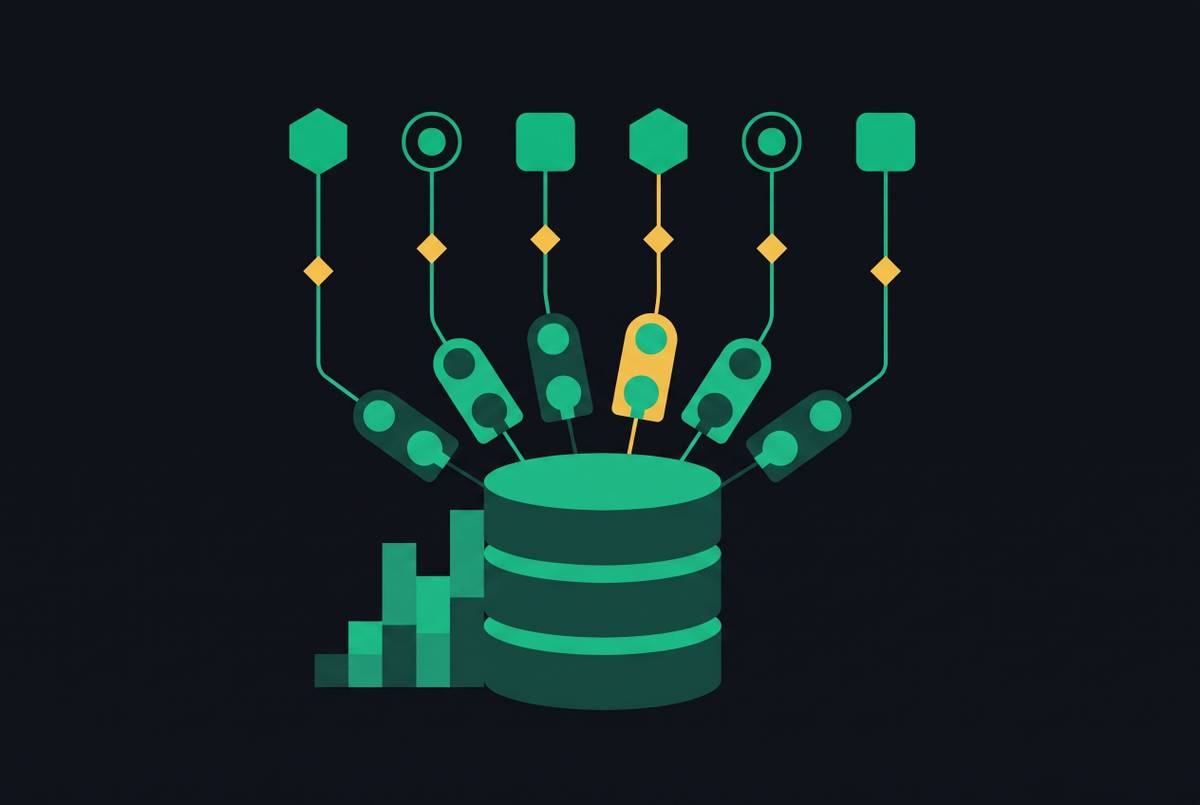
A single MCP server can expose this governed surface to Claude, Copilot, Cursor, or a custom workflow. Those agents do not need separate production database credentials because their queries go to the governed copy. The database side still needs its own enforced boundary, using a dedicated read-only MCP role with GRANT SELECT. The layer adds a different boundary above it. Database permissions constrain source access, while the modeled datasets determine what agents can analyze and how the figures are defined.
Agents affecting real money, inventory, or customer experience cannot rely on data that is hours old simply because the last batch completed successfully. Freshness is therefore a separate requirement from query speed and metric consistency. Teams need to check the modeled data, API surface, production isolation, and freshness together when they assess this architecture.
The four access-control decisions a governed layer must enforce that raw MCP cannot
A team evaluating a solution, including its current setup, should apply four tests of the layer’s governance. The tests cover identity, database privilege, business rules, and accountability. These are not all functions of the protocol. Raw MCP can use database permissions, but the connection alone does not provide the combined semantic and access boundary that analytical agents require.
The first test is whether agent identity is separate from database credentials. Agents must not have production credentials embedded in their configuration. The governed layer holds those credentials and exposes only the analytical surface through MCP. This makes the agent a consumer of governed analytics rather than a direct database client. It also establishes the identity needed to account for requests at the layer.
The second test is whether least privilege is enforced at the database engine. A dedicated read-only MCP role with GRANT SELECT makes the restriction a database rule enforced independently of the model’s instructions. Multi-tenant databases also need Row Level Security to keep SQL injection from breaking tenant isolation. A semantic layer does not replace the database’s responsibility to restrict access.
The third test is whether business logic runs automatically as part of the layer’s behavior. Filtering rules, period definitions, soft-delete patterns, and revenue recognition logic must not depend on the agent remembering to include them. This is the implementation test for the schema gap established earlier. An agent that knows the right table names still needs the right definition. Pre-modeled datasets give the agent that definition before it asks its question.
The fourth test is whether the layer records lineage and access. Every agent query should be logged with the agent’s identity, the metric requested, and the result. That provides an analytical audit trail beyond a raw production connection. The same governed definitions can also support pre-calculated metrics both pushed to inbox, Slack, and reports and retrieved on demand. People and agents then get the same defined data in different ways.
Microsoft’s security framing supplies the final boundary for evaluating these controls. Its server “doesn't decide what's allowed”, leaving role permissions to govern database access. A governed analytics layer adds the business meaning of the calculation being requested and a way to track analytical access, which those object permissions alone cannot express. MCP connects the agent to that system. It does not substitute for the system’s rules.