Headless Analytics Selection Criteria for Teams Whose Frontend Is a Build Not a Buy
Isolate tenants, define metrics, and gate agent access before choosing your backend.

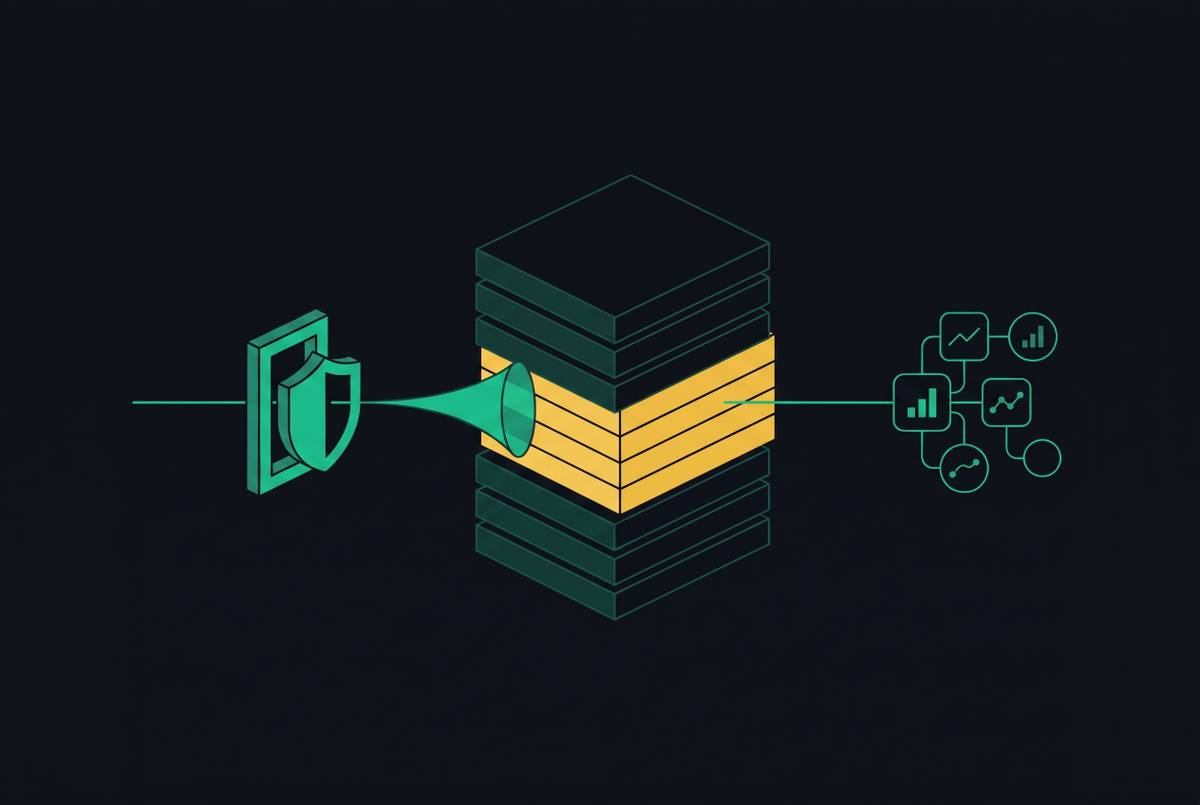
For teams building their own frontend, the right headless analytics platform is a governed backend. Teams should first check tenant isolation, shared metric definitions, and agent-safe access, then look at SDK boundaries and developer experience. For API-first and agent-first teams, including those building on Supabase, the freedom to build their own frontend is useful only if they can do so without rebuilding analytics infrastructure.
Why custom-frontend teams face a different analytics selection problem
A product team’s plan to “just add a few charts” becomes a platform decision when those charts need customer-specific permissions, stable definitions, and saved views. The chart is only the visible surface. Beneath it, something must build queries, apply access rules, and keep results consistent as the application changes.
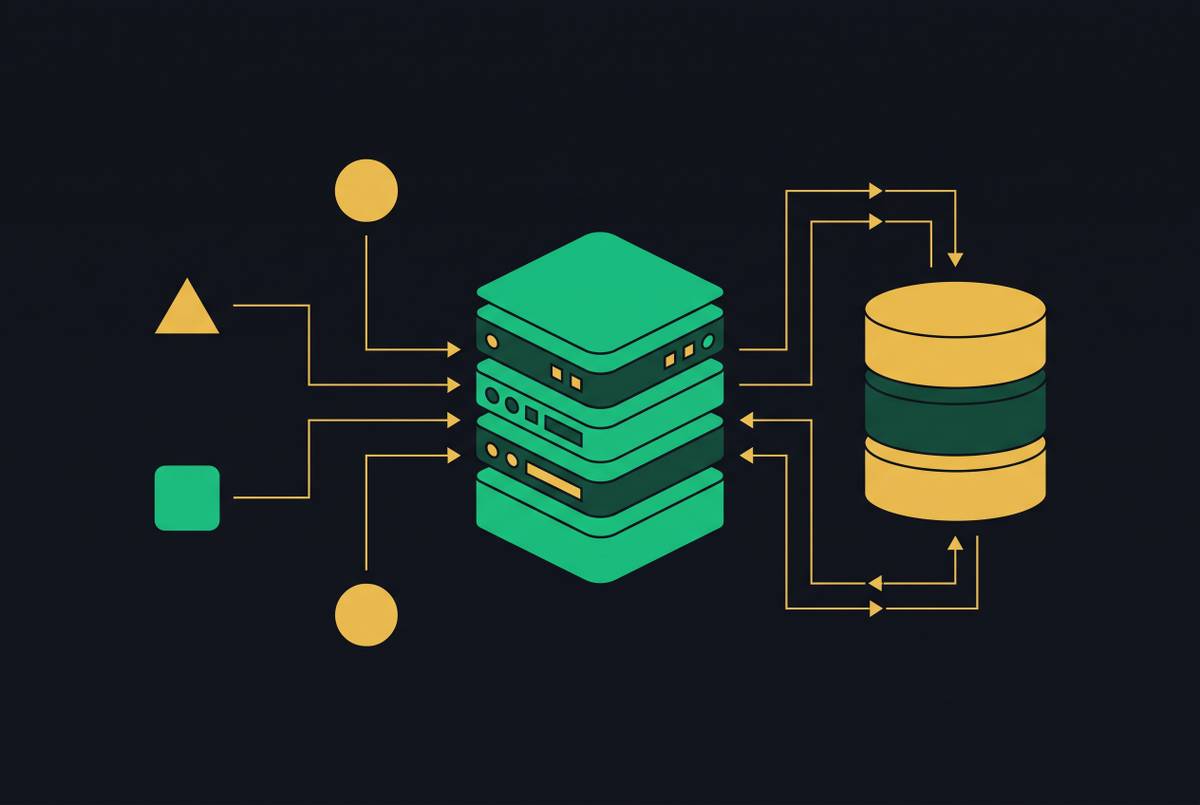
Headless BI separates analytics logic from presentation, much as a headless CMS separates content management from its display. The backend supplies semantic definitions, query execution, and caching, while the frontend consumes data through APIs or SDKs. The product team retains control of every interaction. That shifts the comparison from dashboard features to who owns the infrastructure, because the backend a team chooses decides which difficult layers product engineering must still build and maintain.
What "just build it" actually commits a team to
An in-house dashboard for multi-tenant SaaS needs a query path that never executes without tenant context, parameterized SQL, and chart specifications that survive schema renames. It also needs saved views per customer and an interface that non-technical users can operate. Charting is the smallest visible commitment. Authentication, query generation, and isolation make this a platform that engineers must keep working on.
Those obligations persist after the first release. Schema drift means the team must fix charts whenever changes to the application break them. Customers who dispute numbers create support work that cannot be solved by polishing the interface. Security and tenant isolation also need care beyond a single authentication sprint, because engineers must prevent production data leaks for as long as the platform runs.
The build now includes AI grounding, an evaluation framework, and agentic scoping alongside dashboards and customer permissions. Senior engineering time spent on those layers is time unavailable for the product’s distinguishing features. Given that commitment, the team must decide which layers a headless vendor must own so that it does not have to build and maintain them itself.
Multi-tenancy: the criterion most selection checklists underweight
Tenant isolation is the first hard requirement. An initial row-level security implementation does not, by itself, establish that aggregations, cross-tenant rollups, and dynamic filter combinations are safe. Those query shapes expose the limits of treating isolation as a configuration step. Vendor evaluation therefore needs to examine enforcement across the query path, rather than accept the presence of RLS as a complete answer.
For a team evaluating vendors, the practical test starts with server-side enforcement through JWT claims, RLS, or schema separation. The browser cannot be the trusted boundary. Teams should also check token rotation, cross-tenant access audits, and how reviews work when tables with PII or cross-tenant join keys are added. Incident playbooks for queries that return too many rows, audit trails, and tenant-scoped access reviews establish whether isolation has an operational owner.
For Supabase and Postgres teams, policy performance belongs in the same conversation. Supabase’s published RLS performance guide explains that a naive policy can evaluate an authentication function once per row. Wrapping the authentication call in a subquery lets Postgres evaluate it once per statement, while an index on the filtered column improves performance on large tables. Isolation must work under real query load.
The credential boundary deserves its own scrutiny. In a zero-trust headless design, database credentials and raw query result rows stay on the customer’s infrastructure, and the vendor never connects directly to the production database. A vendor briefing should establish exactly which layer enforces tenant boundaries and what happens when a policy gap is found in production.
The semantic layer: what governs what a metric means before an agent or a user asks
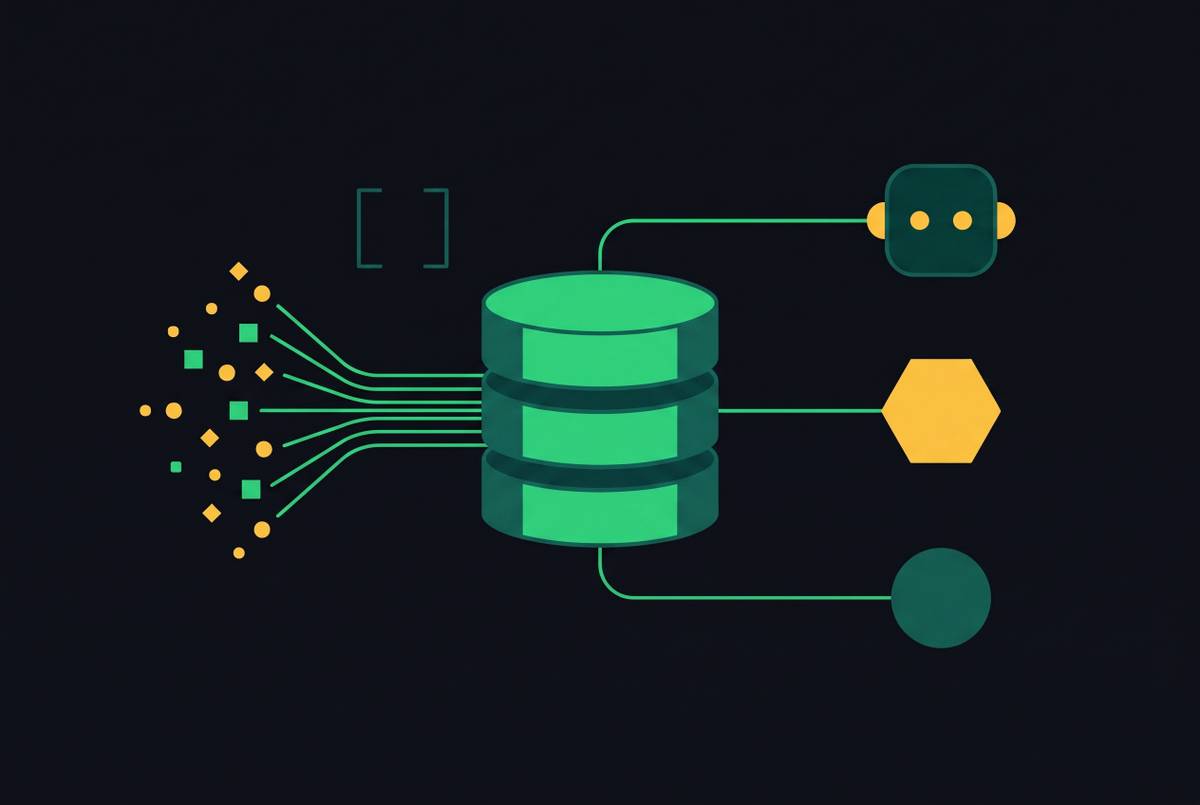
Isolation determines who can see data, but it does not determine what the data means. A semantic layer translates raw schemas into business-friendly metrics and dimensions, centralizing definitions so that each consuming surface computes the same measure. This is a business governance function first. Without it, a well-secured API can distribute conflicting answers to the same question.
Monthly Recurring Revenue” should mean the same thing in a dashboard, a report pushed to a messaging platform, and an AI agent’s response. If three analysts maintain different definitions of a conversion event, faster querying cannot resolve their disagreement. A human-established definition must precede the query, because the agent needs a rule to apply rather than competing interpretations to choose among.
dbt’s Semantic Layer illustrates how definitions become executable. It uses YAML definitions to find the data being asked for, then generates SQL, including joins, to get that data. The value is not merely less handwritten SQL. When sales, finance, and product use different versions of ARR, a shared definition lets leadership make decisions from the same numbers. Vendor evaluation should establish whether the platform enforces that definition across consumers.
Agent-safe data access: why the MCP layer is now a selection criterion
Shared definitions do not make every access path safe. An agent also needs a governed way to reach the data without receiving direct production database credentials. The Model Context Protocol is an open standard that lets AI systems communicate with external tools and data repositories. Its architecture distinguishes the host application, a client inside that host connecting to a single server, and the server exposing tools, resources, and prompts.
The July 2026 MCP specification removed protocol-level sessions and made the protocol stateless. Requests can therefore reach any server instance behind a plain round-robin load balancer. That simplifies scaling the access layer independently. It does not remove the database bottleneck, however, because more MCP server instances cannot prevent direct agent queries from exhausting a production Postgres connection pool.
For Supabase and Postgres teams, the recommended analytical pattern is an MCP server querying a governed analytical copy, with agents kept away from the production instance. Direct production queries risk both connection-pool exhaustion and bypassing row-level security. Access policy must precede the agent connection. The safe pattern has row- and column-level rules, an audit of every agent query, and a requirement that a person approve mutating actions on production assets.
For a team adding usage analytics to an AI agent without a prebuilt dashboard, this governed interface is the relevant delivery surface. The agent should query metrics through the same definition layer that dashboards use, rather than construct a separate interpretation in SQL. Stateless access is not a substitute for governance. Fast, ungoverned access can spread a bad definition or permission error more widely, while a governed layer constrains what the agent can ask and receive.
Headful vs headless SDK: which fits a custom frontend
The SDK choice translates these guarantees into an execution boundary. Headful means the vendor supplies the customer-facing analytics interface, while the product team embeds it, mints a short-lived tenant-scoped token, and owns authentication mapping and the product shell. The vendor owns most analytics interactions. Headless instead supplies generation and governance services that the product’s backend calls, leaving input, loading, empty states, charts, persistence, and layout to the product frontend.
QueryPanel distinguishes the paths by who owns the interaction surface. If a customer can rearrange a dashboard without the team shipping a UI feature, the path is headful. If each chart frame, empty state, and follow-up prompt is part of the product’s component tree, the path is headless. React does not settle this distinction. A native React SDK can still deliver a vendor-owned workspace, so iframe versus React is a separate decision.
The choice can be scored against concrete requirements. Headful fits a customer analytics workspace with dashboards, tenant-specific saved views, and an AI assistant for chart changes, especially when time-to-value this quarter outweighs UI build capacity. Headless fits non-negotiable design-system ownership, analytics embedded within workflows, or a security requirement that credentials and raw rows remain on customer infrastructure.
The two paths can also coexist within a product. A team can first ship a headful workspace, check that customers use it and that tenants are safe, then add headless calls where analytics must fit the components it already has. The surface determines which ownership model is useful. A dedicated /analytics route fits headful delivery, while KPI cards in a workflow sidebar fit headless delivery.
Metric governance before launch: why the dictionary precedes the data layer
Before starting a vendor trial, a team should define the metrics the platform will serve. Data spread across product databases, billing systems, CRM, and spreadsheets is not yet a source of truth that everyone agrees on. Each executive metric needs an authoritative source. ARR should reconcile to the billing system, cash to the bank, and product usage to the analytics layer.
A usable metric dictionary records the formula, eligibility, authoritative source table, time treatment, segments, and owner. It also needs a reconciliation path as a validation step, so a disputed number can be traced back to its source. Without them, buying a dashboard automates disagreement.
That sequence also creates a concrete vendor test. The platform must be able to ingest the dictionary and enforce its definitions across dashboards, API responses, and agent queries. A system that lets each surface write independent SQL against raw tables does not supply that guarantee.
What the selection checklist looks like when the criteria are properly ordered
Tenant isolation is the first gate, covering enforcement at the query layer, credential layer, or both, as well as the response to a production policy gap. Semantic completeness comes next, because an answer can be protected and still be inconsistent. The vendor must show that a single metric dictionary governs dashboard results, API responses, and agent queries.
Agent-safe access follows those two foundations. Evaluation should establish whether an MCP server queries a managed analytical copy rather than exposing production database credentials, and whether the access layer scales independently of production. The SDK execution boundary comes after that.
Delivery and database fit are the next gates. Metric push evaluates whether pre-calculated measures reach people where they work, instead of depending entirely on someone remembering to open a dashboard. Supabase and Postgres fit evaluates whether analytical workloads stay off the operational database. It also asks whether the analytical-copy pattern works without ETL, schema changes, or new infrastructure for the team to manage.
Developer experience differentiates the vendors that pass those gates. SDK quality, documentation, staging speed, and time-to-first-workspace can then be assessed against the intended surface, whether that is an embedded workspace, custom KPI cards, or an agent interface. A convenient API cannot repair weak isolation or inconsistent definitions. The final vendor test is whether an AI agent and the CEO asking the same business question receive the same number, with an answer traceable to one governed definition.